
Fall has arrived and with-it seasonal snacks. We enjoyed making a caramel sauce for our apple slices.
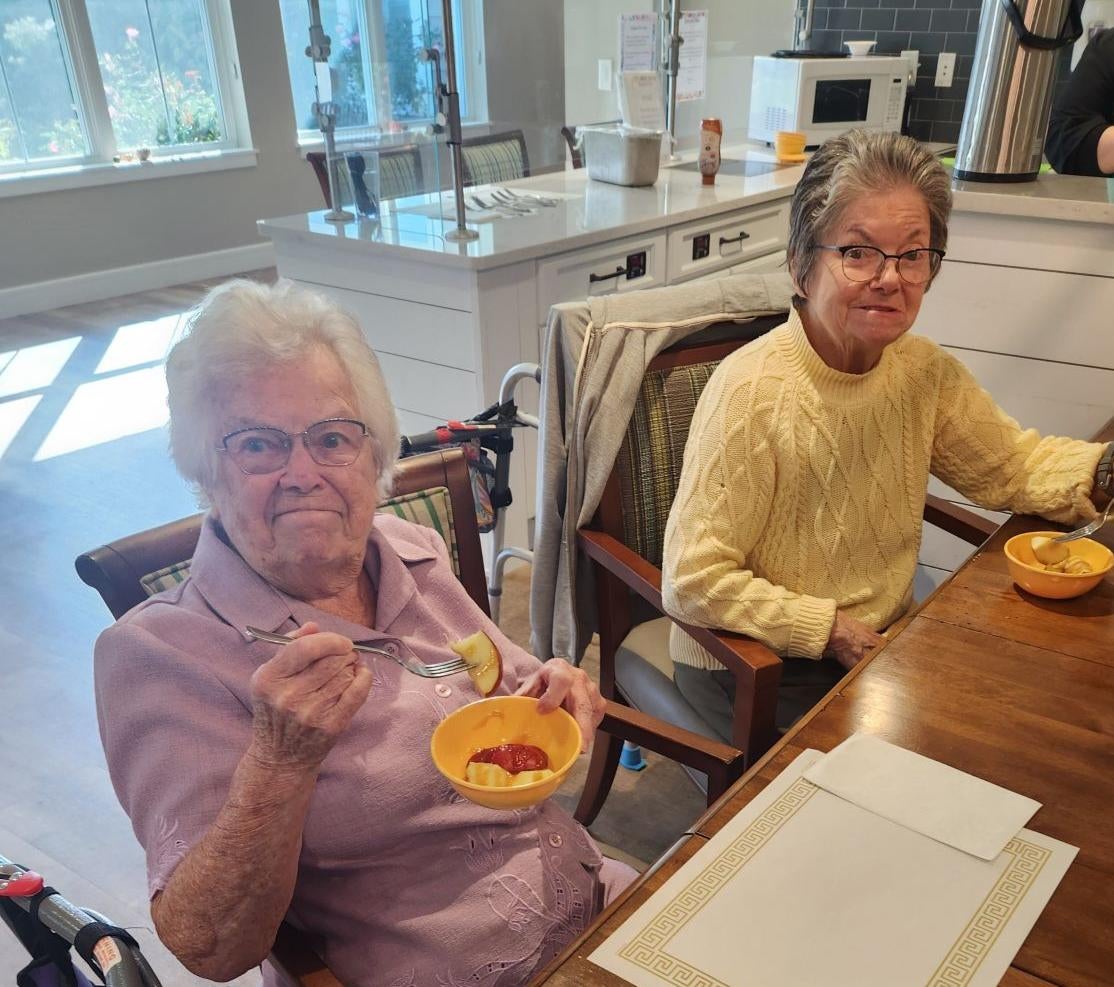
Fall has arrived and with-it seasonal snacks. We enjoyed making a caramel sauce for our apple slices.
As we approach the holidays, Columbia Cottage would like to remind our residents that while we appreciate your kindness and generosity, staff are not permitted to accept gifts from residents or their families. If you would like to share some holiday spirit you can donate to the employee fund which benefits all staff. Thank you and Happy Holidays!
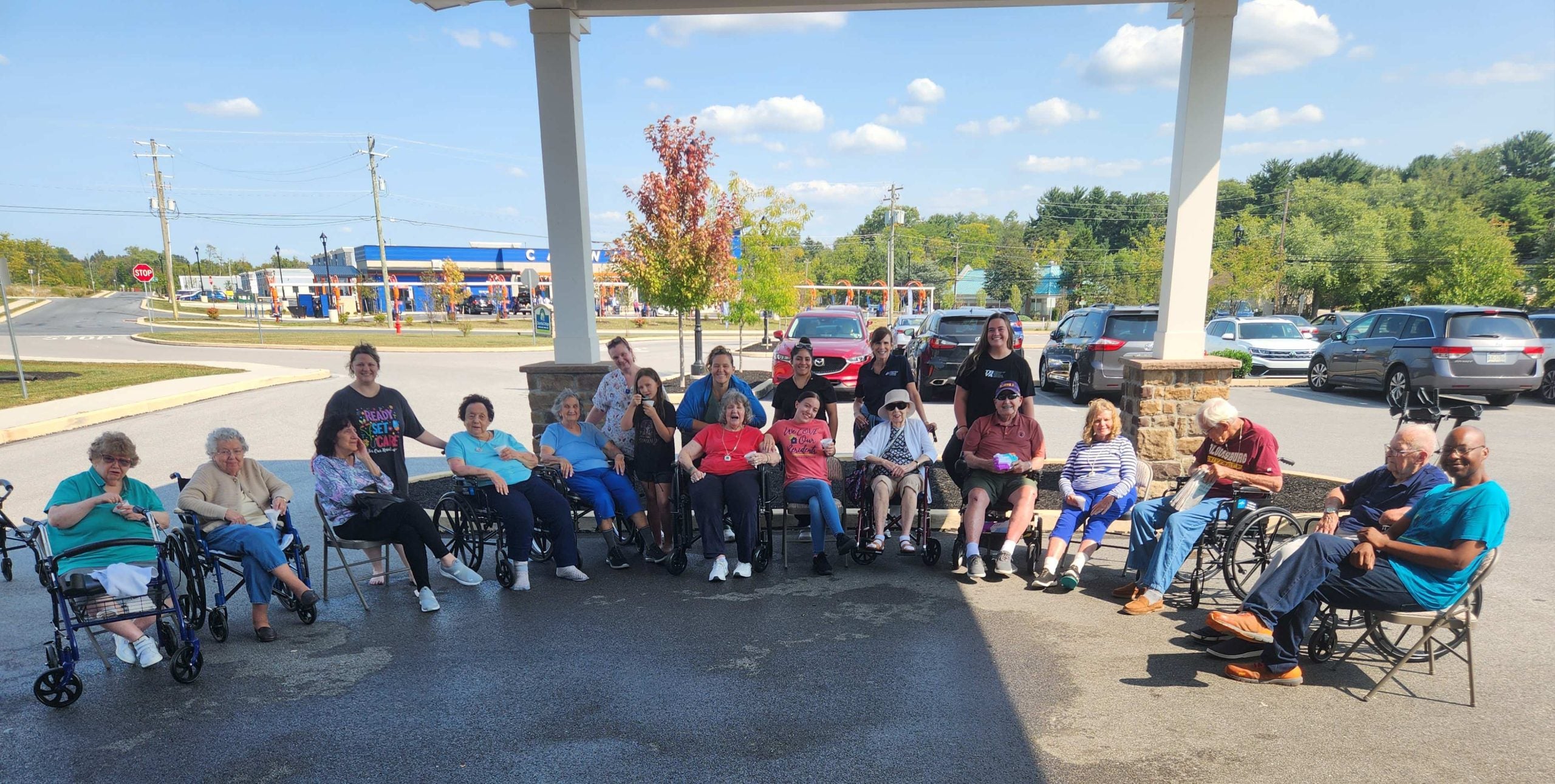
We celebrated the change of seasons with treats of cotton candy, popcorn, carnival games, snow cones and our annual water balloon battle! Staff, Residents, Families, and Friends of the Cottage came prepared to get wet on a Friday afternoon. Water balloons and water guns were filled and refilled with water as we splashed around and popped the water balloons on each other. The best part was ending the afternoon with dumping buckets of water on Lawrence and John!
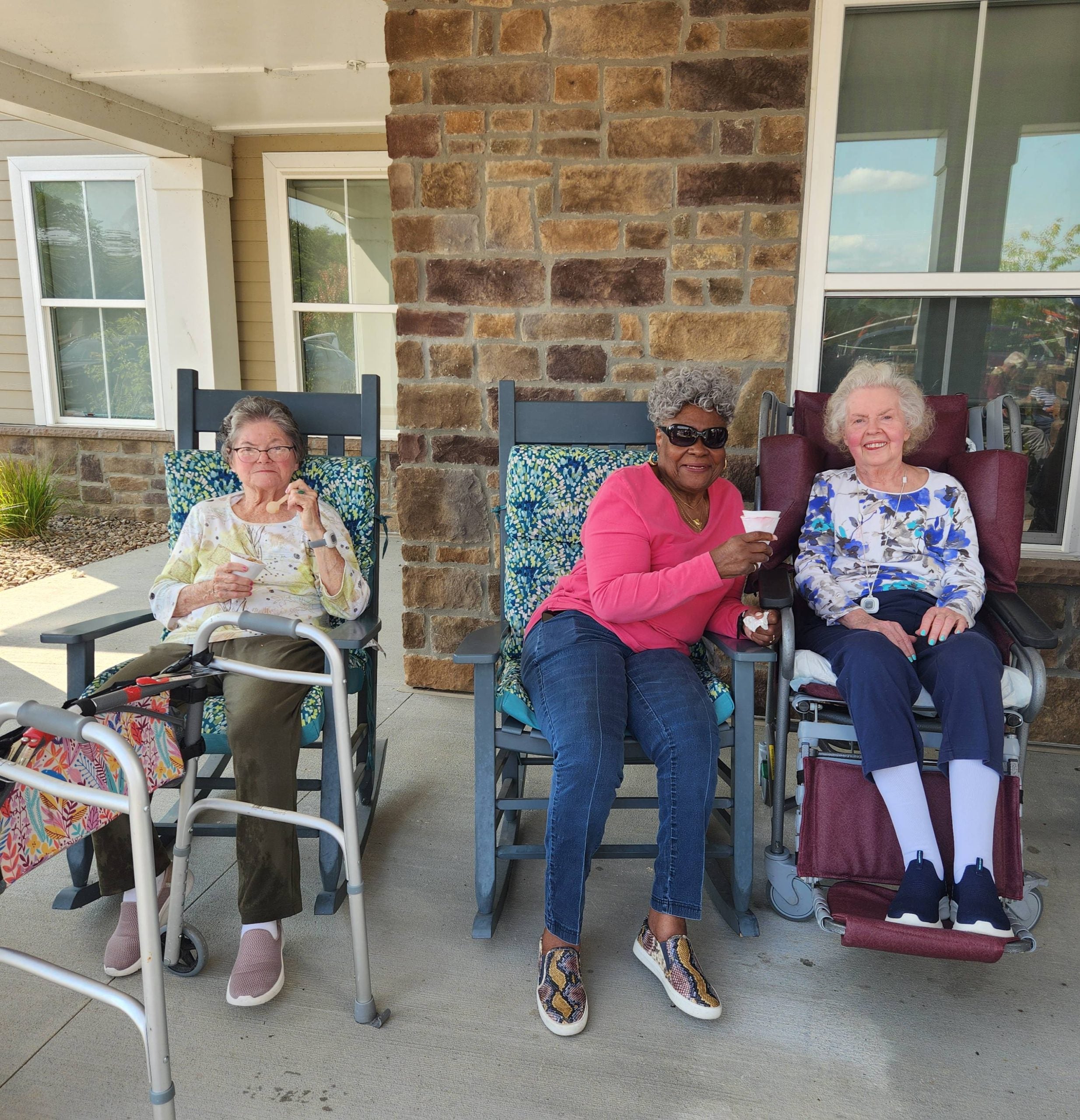
Residents enjoyed a variety of Life Enrichment activities, from engaging discussions to lively games. Friendships blossomed as neighbors shared laughter and stories. The warm atmosphere at Columbia Cottage created a welcoming space for everyone to feel at home.
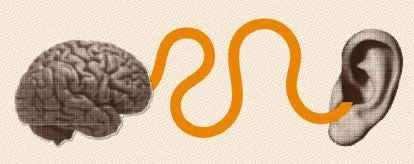
Many people expect hearing loss as they age, but what if it’s more than just an inconvenience? Research suggests a significant link between hearing loss and dementia, a connection that’s causing experts to examine what we once considered a natural part of aging. For years, hearing loss was often brushed aside as a minor issue that could be dealt with by simply turning up hearing aids or asking people to repeat themselves. However, emerging studies, such as those conducted at Johns Hopkins University, reveal that hearing loss might play a critical role in our brain health. People with hearing loss are more likely to develop dementia, including Alzheimer’s disease, compared to those with normal hearing. This finding has prompted scientists and doctors to continue to explore the reasons behind this connection. The studies at Johns Hopkins identified four main theories about how hearing loss could contribute to cognitive decline. Common Physiological Pathway: The first theory suggests hearing loss and dementia might share a common cause. The same changes that lead to hearing loss, such as blood vessel damage or nerve degeneration, could also contribute to dementia. This is considered the least likely theory. Cognitive Load: The second theory revolves around cognitive load, or how much work the brain must do to understand speech when hearing is impaired. When we struggle to hear, our brain must work harder to make sense of sounds. Over time, this constant strain may take a toll on cognitive abilities, leading to a higher risk of dementia. Brain Structure Changes: The third theory suggests that hearing loss might change the brain’s structure in ways that contribute to cognitive decline. Older adults with hearing loss tend to have less gray matter in the parts of the brain responsible for processing sound. This reduction in brain tissue could be a sign that the brain is shrinking or atrophying, potentially setting the stage for dementia. Social Isolation: The fourth theory looks at the impact of social isolation, which is common among those with hearing loss. When it becomes difficult to engage in conversations, people often withdraw from social activities, leading to loneliness and reduced mental stimulation. Social isolation has long been recognized as a risk factor for dementia, so it’s possible that hearing loss indirectly contributes to cognitive decline by making people less socially active. While the link between hearing loss and dementia is still being studied, the evidence is strong enough that experts suggest protecting your hearing. Doctors suggest that people limit their exposure to loud noises and wear earplugs when exposed to loud noise. Regular hearing checks are highly recommended.
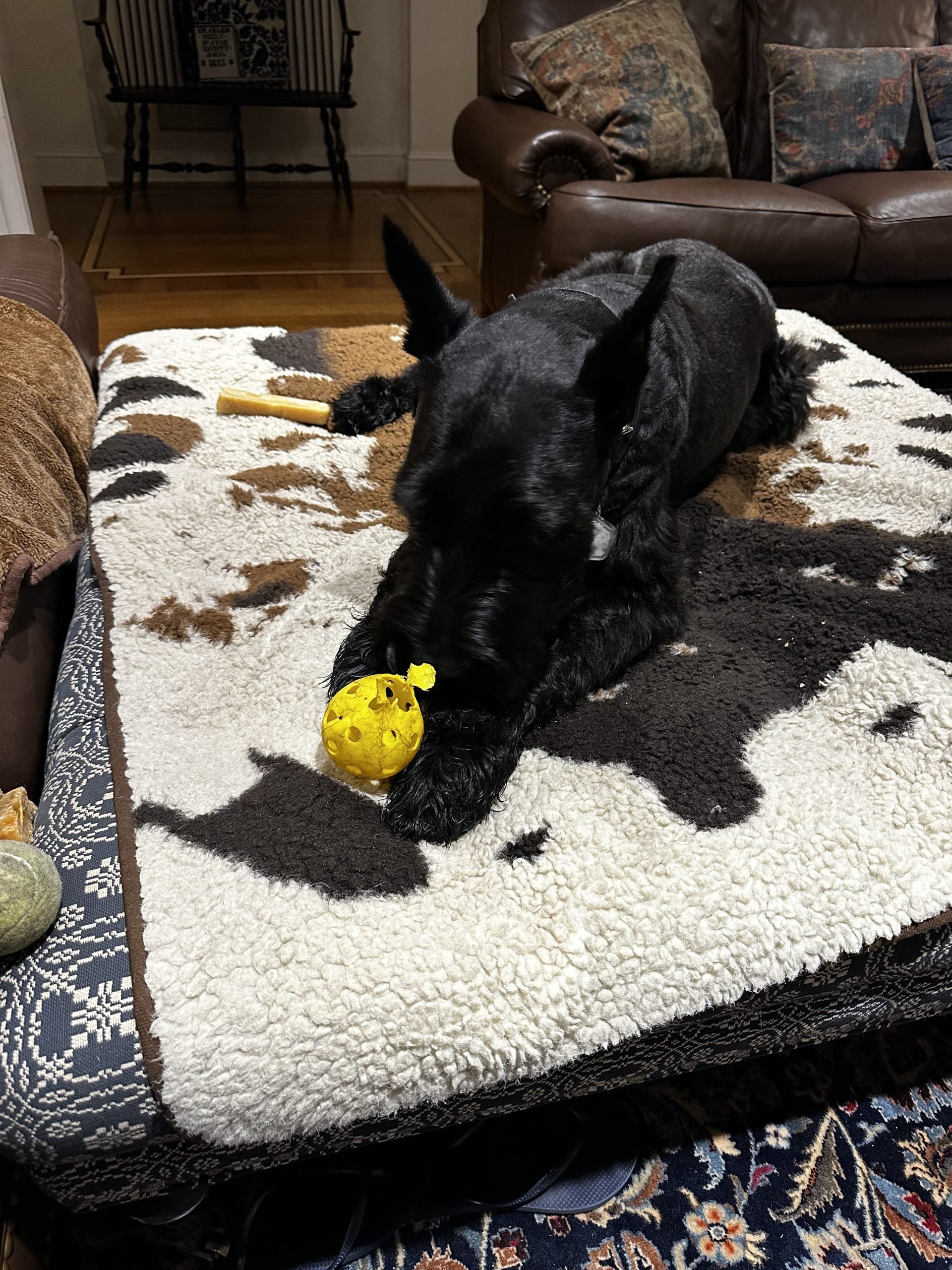
Hey, it’s Jett, your favorite furry athlete and boy do I have a bone to pick with my humans. They turned my beloved tennis court into…pickleball! Who does that?! Gone are the fuzzy tennis balls I could sink my teeth into. Now, it’s these hard, weird pickleballs with holes. I tried catching one, but it kept slipping out of my mouth like soap. And those holes? My teeth got stuck in them! Not cool, humans. Not cool. Then they yelled, “Out!” So naturally, I thought, “I’ll just eat the ball.” Nope! Worst. Snack. Ever. But don’t worry, I’ll figure it out – right after my nap. Your pickleball – challenged pal, Jett
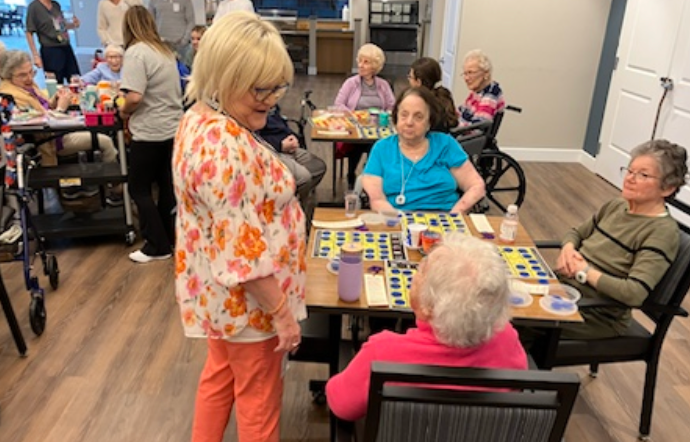
Our Ombudsman, Kathy, recently hosted a successful Residents' Rights Bingo event. This engaging activity aimed to educate residents on their rights in a fun and interactive way. Participants learned about important topics like privacy, dignity, and decision-making through bingo calls. The event fostered a positive atmosphere and provided residents with a platform to connect with the Ombudsman and ask questions.
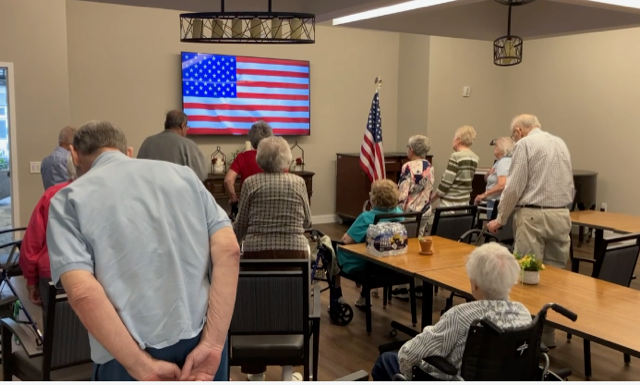
June was a month filled with pure, soapy fun! We declared it "Bubble Balooza" and celebrated all things bubbles throughout the entire month. This June, we came together for a rousing Flag Day celebration! Yes, we began flag day with a heartfelt recitation of the Pledge of Allegiance, a powerful reminder of the values our flag represents. The talented Mary-Kate Spring Lee, harpist, vocalist, and songwriter brought her class along to share their musical gifts. Their beautiful melodies filled the air, creating a truly special atmosphere. We were also fortunate to have another visit from the versatile Jessica Phillips Rife, opera singer, church music director, pianist, songwriter, and recording artist. Ms. Rife not only graced us with her presence on Memorial Day, but also returned for Flag Day, treating everyone to a selection of patriotic music spanning generations. Her performance was a highlight of the celebration, and we are so grateful for her time and talent. June's Bubble Balooza was a resounding success! It was a month filled with laughter, connection, and pure, soapy fun. -Lawrence, Activities Coordinator

Staying hydrated and protecting skin from the sun are critical for everyone during the summer. Dehydration and heat-related illness can lead to delirium or confusion and increase fall risk. People with memory loss might not notice these symptoms. Alzheimer’s disease makes it difficult for people to recognize thirst and regulate their body temperature. Helping people cope with the heat is an important responsibility for caregivers. Hydration Tips Set regular reminders to encourage drinking water throughout the day. This can be done through alarms, notes, or verbal cues. You could also make it a point to offer a drink every hour. Keep cool water in an accessible pitcher or dispenser with cups. Slices of lemon, lime, or cucumber make water look more enticing. Placing cute drink napkins or some flowers near the water is also attractive. Offer beverages people enjoy. Herbal iced tea and sparkling water are some examples. Just be mindful to avoid juices or sodas that are high in sugar. Offer fruits and vegetables with high water content, such as watermelon, strawberries, cucumbers, and tomatoes. Watch for visible signs of dehydration, such as dry mouth and fatigue. Serve a drink at every activity. Serve Arnold Palmers (iced tea mixed with lemonade) for a daily “happy hour.” Skin Protection Tips Remind or help people to apply broad-spectrum sunscreen with at least SPF 30 to all exposed skin. Reapply the sunscreen every two hours. Encourage wearing lightweight, loose-fitting clothes that cover as much skin as possible. Clothes with UV protection and hats help, too. Find outdoor spaces in the shade. Umbrellas and trees are your friends! Depending on your location, stay indoors during the sun’s peak hours. In many places, noon to 4:00 p.m. is the sunniest time. Make a point of spending some time outdoors in the morning or evening. Blue Lizard sunscreen is recommended by dermatologists. It is mineral-based and safe for sensitive skin. Remember to take care of yourself. As a caregiver or companion, staying hydrated and protecting your skin are critical to preserving your health and energy.
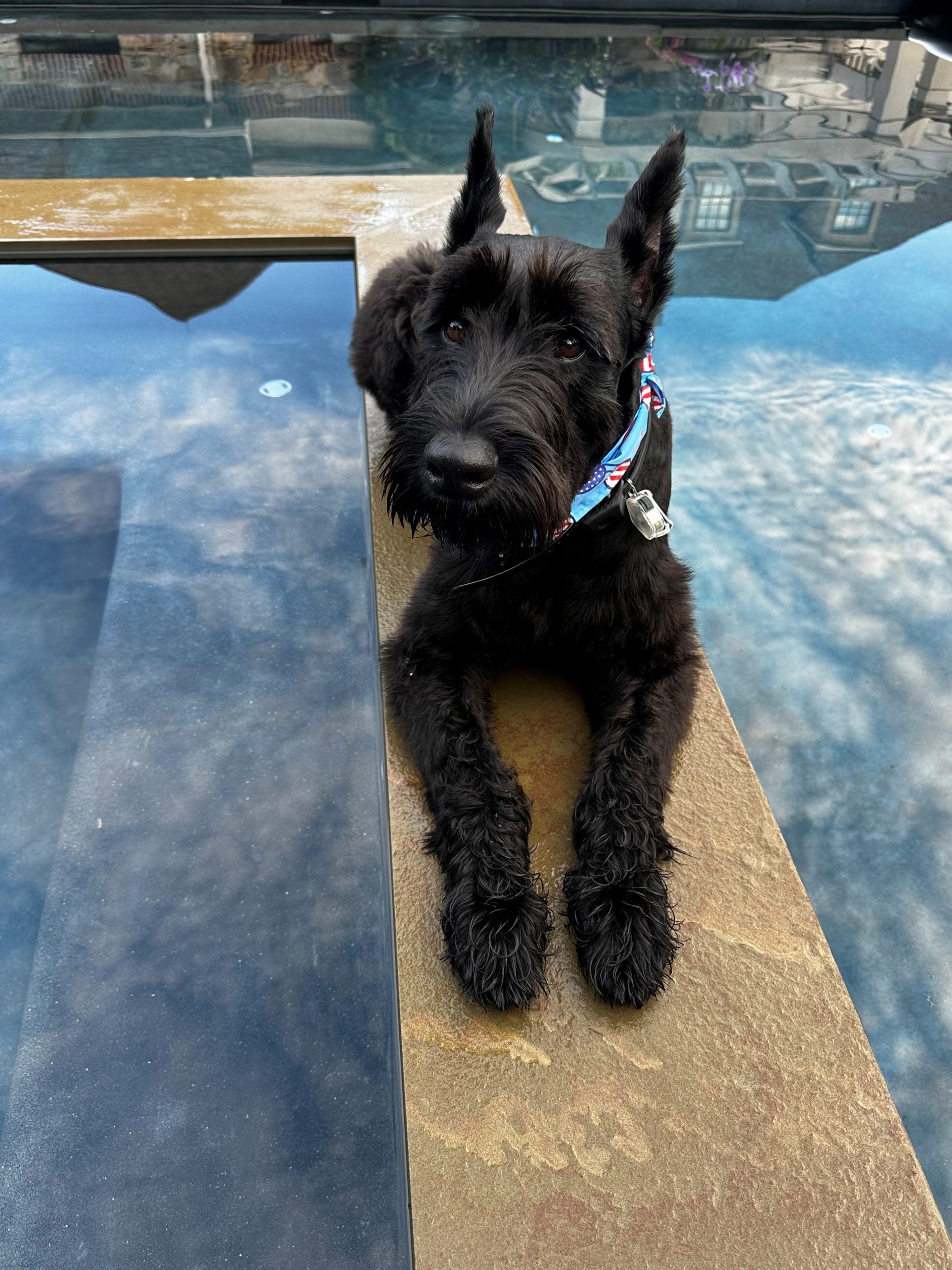
Hey there, it’s Jett, your favorite furry visitor! Last month, you got to meet me, and this month, I’m back to spill the beans on my hilarious summer adventures! With the thermometer hitting triple digits, I’ve become quite the cool canine – literally! I love tearing around in the sunshine, but even us energetic dogs need a break. My top trick? Dashing through the hose stream while Mom waters the plants. Picture this: a soaked, grinning me and a very unimpressed Mom. Classic, right? But wait, there’s more! I’ve discovered that rolling around in the shaded grass is the ultimate cool-down move. It’s like my version of a spa day, with the added bonus of looking absolutely ridiculous. Trust me, it’s a sight to behold! And my pièce de résistance? Chilling indoors and chomping on ice cubes. I stare longingly at the ice cream, but alas, that’s off the menu for this pup. I hope you’re getting your fair share of ice cream to stay cool, while I dream of what could have been! But I’m not alone in my cooling escapades. My fellow dog buddies get pretty creative too! Some dig holes in the yard to find cool soil, others splash around in kiddie pools, and a few even try to catch the sprinkler’s spray. It’s all part of the fun of summer when you’re a dog! So, next time you see me, just remember: staying cool is an art, and I’m the master artist!
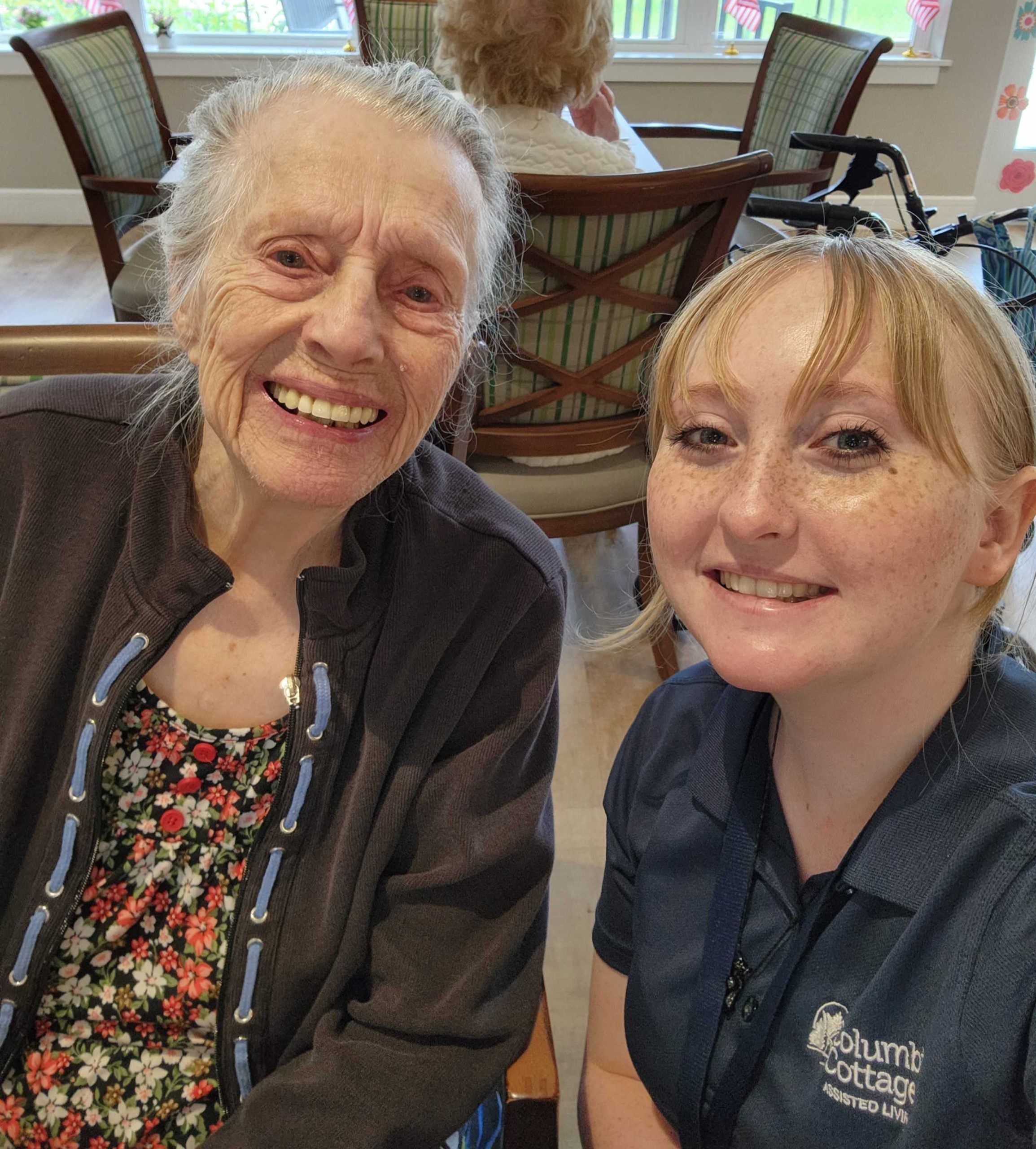
We enjoyed taking selfies throughout the day while we socialized on the porch, participated in music therapy, pet therapy, and walking through our community. Fun Facts About Selfies: The term “selfie” was officially added to the Oxford English Dictionary in 2013. The “duck face” pose, where people pout their lips in selfies, gained popularity in the early 2010s. Women, on average, take 1.3 times more selfies than men. Selfie sticks were invented in 1938 by Hiroshi Ueda, a Japanese photographer, but gained widespread popularity in the 2010s. Disney banned selfie sticks at Disneyland in 2015 due to concerns about safety. The problem was that visitors were using selfie sticks even during rides, creating a hazard. The fear of taking selfies or seeing oneself in photographs is known as “selfie-phobia.”
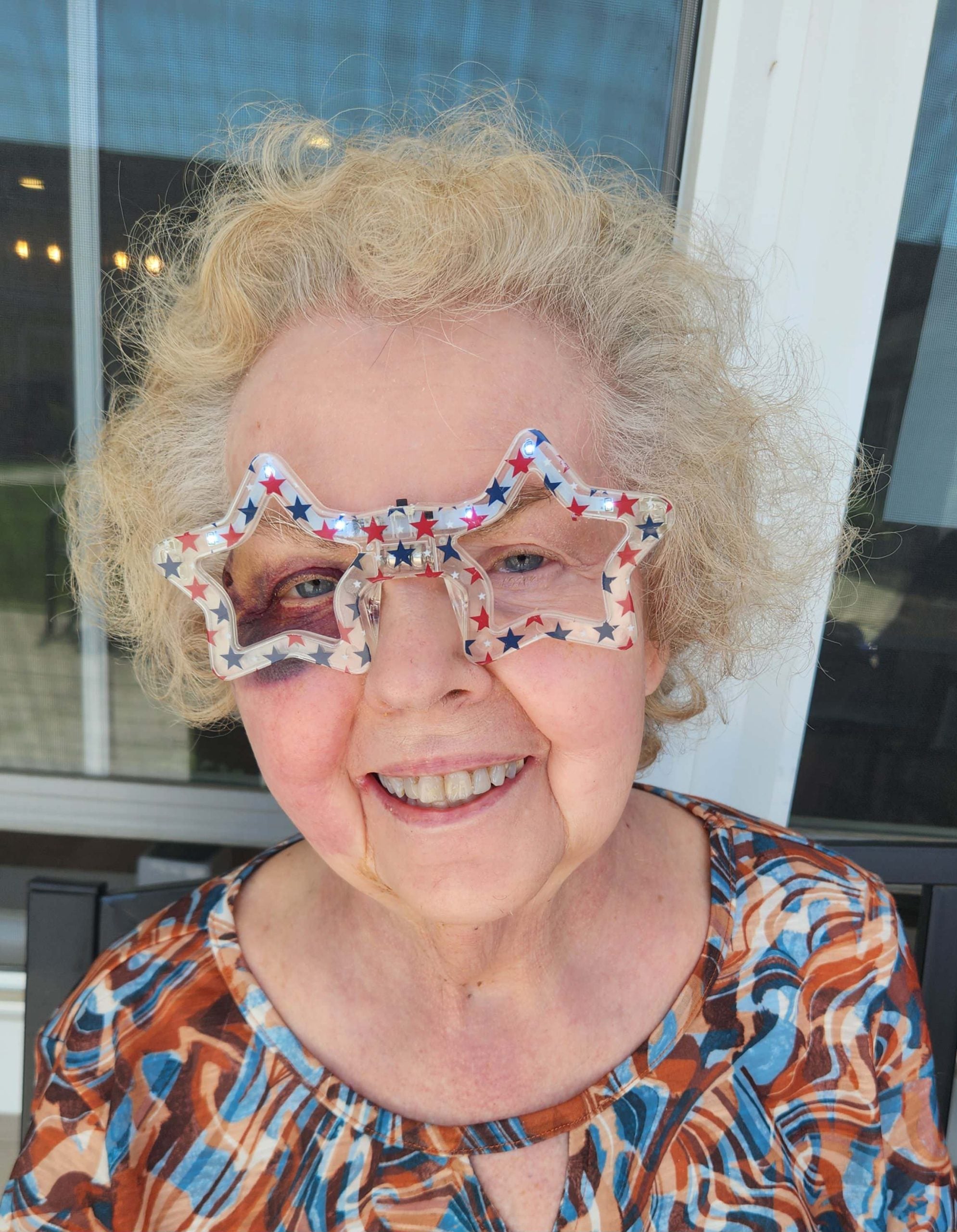
Showing off our Patriotic Pride with our cool shades while enjoying a beautiful day in our courtyard.