Contact Us to Learn More

Blog / Hanover News

Blog

All Hanover News Linglestown News Collegeville News News Wyomissing News Hershey News Blog Assisted Living Advantages Honoring Choices What To Expect Columbia Cottage Service Guides Health and Medical Practices Services And Amenities
rabbit

The Year of Rabbit

Chinese New Year, or Lunar New Year, is a 15-day festival that begins on January 22. Celebrations can last up to 16 days, depending on the sighting of the new moon, but only the first 7 days are a public holiday. An animal is associated with each Chinese New Year, and 2023 is the Year of the Rabbit. If you were born in 1927, 1939, 1951, 1963, 1975, 1987, 1999, 2011, 2023, or 2035, then you are born under the Rabbit The Rabbit symbolizes luck People born under this sign are often in constant pursuit of their ideas and dreams, but they can often get jealous if they don’t get their way. Men born under sign tend to be polite and do whatever to avoid conflict. Women born under this sign are thoughtful and polite and love being social. Lucky numbers are 3,4 and 9

RWD, Jessie Ohler

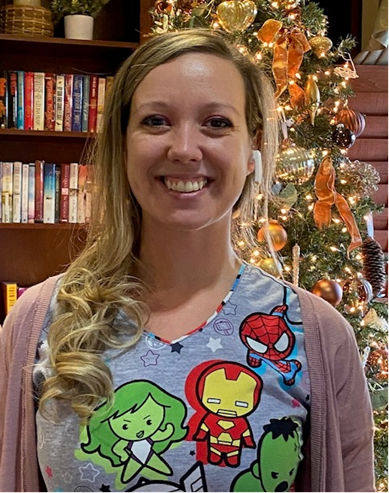
Hanover’s New Resident Wellness Director

Columbia Cottage Team would like to Welcome our new  2 nd shift Wellness Director, Jessie Ohler. Please give her a warm welcome as she learns about Columbia Cottage. We are very excited that she decided to join our Cottage family I started as a CNA in October 2006 after taking the CNA certification course.  I graduated from the Hanover Practical Nursing Program in January 2012. I worked as a home health nurse for two years while still working per diem in skilled nursing.  After my private duty nursing position sadly ended when my client passed away, I decided to work full time at Homewood on both their skilled nursing floors and their rehab floor.  I have 15 years of experience with dementia/memory care, along with some time working as a Clinical Coordinator for a family medical practice.  I am currently in school to obtain my RN.  My husband’s name is Justin, and we have an 8-year-old son named Julian.  Our son does karate and he is halfway to a Black Belt.   We have seven chickens and one Pug named Moe.  I truly enjoy spending time with my chickens as well as cooking and keeping a clean and tidy home.  I also LOVE to eat food and talk about food.  Cooking while listening to music is also one of my favorite hobbies.  Sometimes just sleeping is also nice!

Yarn trees1

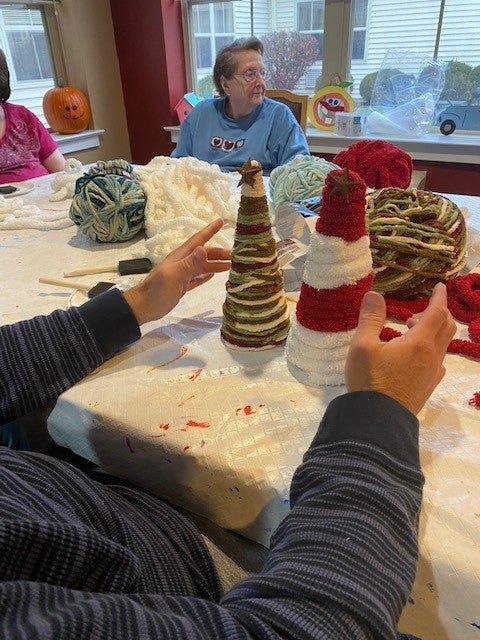
Yarn Trees

Our crafty residents enjoyed making yarn trees for the Holidays.

Christmas Bazaar7

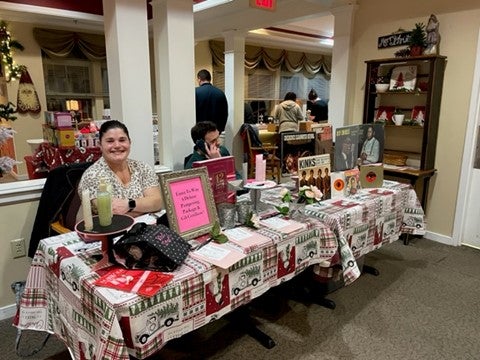
Christmas Bazaar

We want to thank all vendors, families, and residents for making our Christmas Bazaar a wonderful event.  There was so much laughter and Holiday Cheer.

IMG_1994

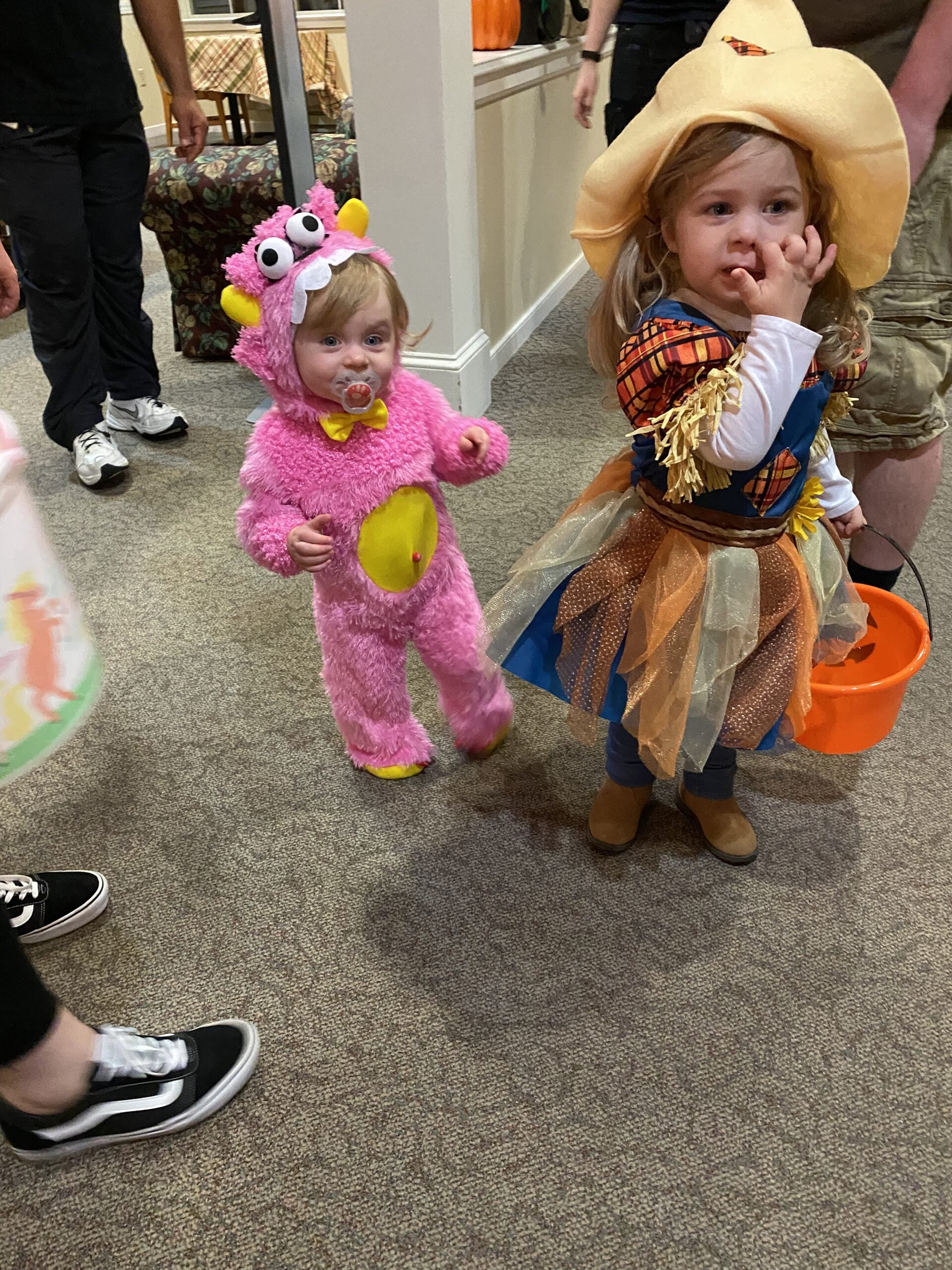
Trick or Treat

The Cottage hosted trick-or-treat for families and employees. We even had some four-legged trick-or-treaters that did tricks for their treats.

santa icon

The Story Of Virginia O’Hanlon

As we enter another Christmas season, children worldwide will be asking an age-old question that has challenged parents and grandparents for centuries: Is there really a Santa Claus? Since September 21, 1897, the answer has been a resounding “Yes, Virginia.” That’s when New York Sun veteran newsman Francis Pharcellus Church penned the most famous and most reprinted unsigned editorial in the history of journalism Virginia O’Hanlon was the daughter of Dr. Philip O’Hanlon, a coroner’s assistant in Manhattan. In September of 1897, shortly after youngsters returned to school, Virginia came home to report that her classmates claimed Santa Claus didn’t exist. She asked her father if this was true, and her father responded with a suggestion. He advised her to write a letter to the New York Sun and ask the editors, saying, “If you see it in The Sun, it is so.” Virginia followed her father’s advice and wrote this now-famous letter Dear Editor, I am 8 years old. Some of my little friends say there is no Santa Claus. Papa says “If you see it in The Sun, it is so.” Please tell me the truth, is there a Santa Claus? Virginia O’Hanlon 115 West Ninety-Fifth Street. The letter found its way to Sun editor Edward P. Mitchell, who handed it off to one of his veteran writers and asked him to reply. That writer was Francis Pharcellus Church, who was irritated by the request, because he found it both absurd and beneath him. Church was a former Civil War correspondent, and those who knew him believed he had been jaded by the experience. Yes, Virginia, There Is a Santa Claus VIRGINIA, your little friends are wrong. They have been affected by the skepticism of a skeptical age. They do not believe except they see. They think that nothing can be which is not comprehensible by their little minds. All minds, Virginia, whether they be men’s or children’s, are little. In this great universe of ours man is a mere insect, an ant, in his intellect, as compared with the boundless world about him, as measured by the intelligence capable of grasping the whole of truth and knowledge. Yes, VIRGINIA, there is a Santa Claus. He exists as certainly as love and generosity and devotion exist, and you know that they abound and give to your life its highest beauty and joy. Alas! how dreary would be the world if there were no Santa Claus. It would be as dreary as if there were no VIRGINIAS. There would be no childlike faith then, no poetry, no romance to make tolerable this existence. We should have no enjoyment, except in sense and sight. The eternal light with which childhood fills the world would be extinguished. Not believe in Santa Claus! You might as well not believe in fairies! You might get your papa to hire men to watch in all the chimneys on Christmas Eve to catch Santa Claus, but even if they did not see Santa Claus coming down, what would that prove? Nobody sees Santa Claus, but that is no sign that there is no Santa Claus. The most real things in the world are those that neither children nor men can see. Did you ever see fairies dancing on the lawn? Of course not, but that’s no proof that they are not there. Nobody can conceive or imagine all the wonders there are unseen and unseeable in the world. You may tear apart the baby’s rattle and see what makes the noise inside, but there is a veil covering the unseen world which not the strongest man, nor even the united strength of all the strongest men that ever lived, could tear apart. Only faith, fancy, poetry, love, romance, can push aside that curtain and view and picture the supernal beauty and glory beyond. Is it all real? Ah, VIRGINIA, in all this world there is nothing else real and abiding. No Santa Claus! Thank God! he lives, and he lives forever. A thousand years from now, Virginia, nay, ten times ten thousand years from now, he will continue to make glad the heart of childhood.

Drunken sailor7

Happy Birthday Navy

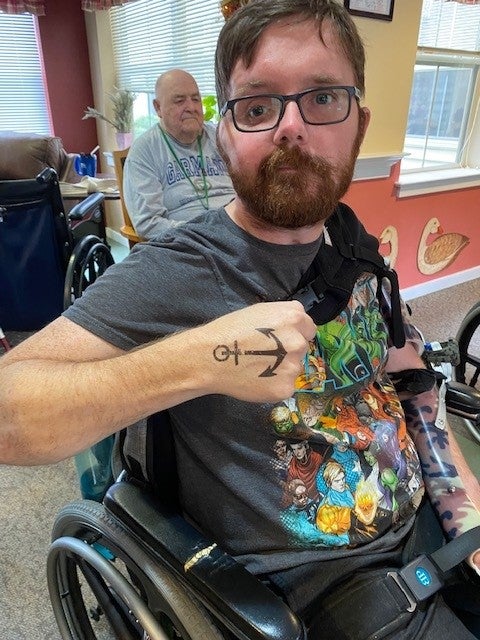
October 13 th is the Navy’s birthday, so we celebrated with our “Drunken Sailor Tattoo Parlour.” What will we do with a drunken sailor? What will we do with a drunken sailor? What will we do with a drunken sailor? Early in the morning!

John Neiderer- Army Engineers

Columbia Cottage Hanover Veterans

Thank you for your service to our country. Your bravery, sacrifice, and strength do not go unnoticed, and we will always be indebted to you and your family for all that you have given to our country.

flanders-fields

In Flanders Fields

In Flanders Fields, the poppies blow Between the crosses, row on row, That mark our place; and in the sky The larks, still bravely singing, fly Scarce heard amid the guns below. We are the dead. Short days ago We lived, felt dawn, saw sunset glow, Loved and were loved, and now we lie, In Flanders fields. Take up our quarrel with the foe: To you from failing hands we throw The torch; be yours to hold it high. If ye break faith with us who die We shall not sleep, though poppies grow In Flanders fields. In Flanders Fields " is a war poem in the form of a rondeau, written during the First World War by Canadian physician Lieutenant-Colonel John McCrae. He was inspired to write it on May 3, 1915, after presiding over the funeral of a friend and fellow soldier, Lieutenant Alexis Helmer. They died in the Second Battle of Ypres. According to legend, fellow soldiers retrieved the poem after McCrae, initially dissatisfied with his work, discarded it. "In Flanders Fields" was first published on December 8 of that year in the London magazine Punch. Flanders Fields is a common English name for the World War I battlefields in Belgium and France. It is one of the most quoted poems from the war. As a result of its immediate popularity, parts of the poem were used in efforts and appeals to recruit soldiers and raise money selling war bonds. In addition, it references the red poppies that grew over the graves of fallen soldiers, resulting in the remembrance poppy becoming one of the world's most recognized memorial symbols for soldiers who have died in the conflict. The poem and poppy are prominent Remembrance Day symbols throughout the Commonwealth of Nations, particularly in Canada, where "In Flanders Fields" is one of the nation's best-known literary works. The poem is also widely known in the United States and is associated with Veterans Day and Memorial Day.

apple cider 2

Apple Cider Day

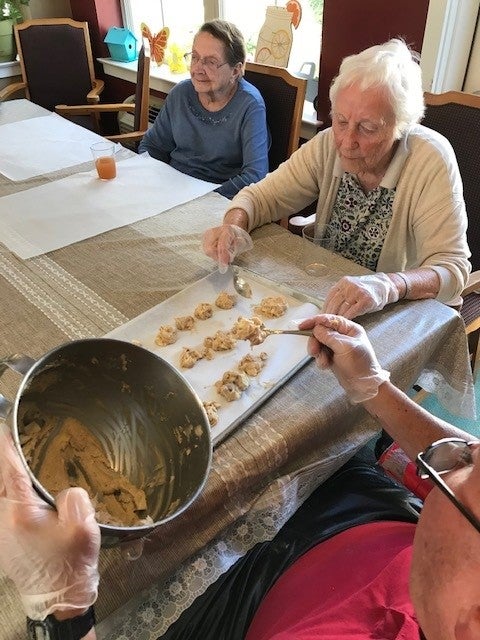
September 1 was Apple Cider Day. The resident decided to make a batch of Apple cider cookies to celebrate. Apple Cider Cookie Recipe Betty Crocker Servings 40 Ingredients 2 tablespoons sugar 1 package of Apple Cider instant drink mix (do not prepare) 1 ½ teaspoon ground cinnamon 1 pouch Betty Crocker Sugar cookie mix ½ cup butter softened 1 egg ¾ cup finely chopped peeled apple STEPS Heat oven to 375 degrees F. In a small bowl, mix sugar, 1 teaspoon of the apple cider drink mix and ½ teaspoon of cinnamon and set aside In a large bowl, stir cookie mix, softened butter, egg and remaining apple cider drink mix and cinnamon with a spoon until a soft dough forms. Stir in apple slices until combined. Shape dough into 40 (1 ¼ inch) balls. Roll balls in a sugar-spice mixture. Place 2 inches apart on an ungreased cookie sheet. Bake for 7-9 minutes or until the edges are set and light golden brown. Cool 1 minute, remove from cookie sheet to cooling rack. Cool completely. Store covered in an airtight container.

ghost-costume

Halloween

What do you call the spooky season? Some might say "All Hallows Eve" or "All Saints Day," but most call it Halloween. Either way, the October 31 day goes by many names; it is the most beloved holiday in our country. But even though you have probably celebrated your whole life, there may be a lot you don't know about Halloween There is a reason why black and orange are associated with Halloween. Orange signifies the harvest of autumn, while black is a symbol of darkness and acts as a reminder that Halloween was a festival that marked the boundaries between life and death Scarecrows symbolize the ancient agricultural roots of the holiday. The greek farmers created the first scarecrow. Crows being the primary culprit is how the name originated Irish immigrants brought Halloween to the US during the mid-1800s. When a flood of Irish immigrants fled Ireland during the great potato famine, they brought the tradition of Halloween with them The name Jack O' Lantern is rooted in Irish folklore about a man named Stingy Jack. The legend goes that he fooled the devil and, in turn, was forced to walk the earth with only a lump of burning coal in a hollowed turnip to light his way. So the Irish began to call him Jack of the Lantern, which became Jack O' Lantern. Candy wasn't given out until about the 1950s. There was a time when trick or treat didn't give out candy but instead pieces of cake, fruit, nuts, coins, and small toys. In 1950 the candy makers began to promote their goods for Halloween, so the tradition of candy to trick or treaters began. Did you know that skittles is America's favorite candy? And you may be able to guess the least favorite- Candy Corn.

moon

Hunter's Moon

On October 9, look for the full moon, Hunter's Moon. This moon is named because as Native Americans prepared for cold months, they looked to October's full moon to gather meat for the winter. The Hunter's Moon is similar to the Harvest moon. The Hunter's Moon rises on successive days for only about 40 minutes later than the previous day making the periods of darkness between sunset and sunrise shorter. The fields were traditionally reaped in late September or early October, and hunters could easily see deer and fox that had come searching for fallen grains by the light of the moon.

Contact Us

Fill out this form below and we'll contact you shortly
*Required Fields